The story
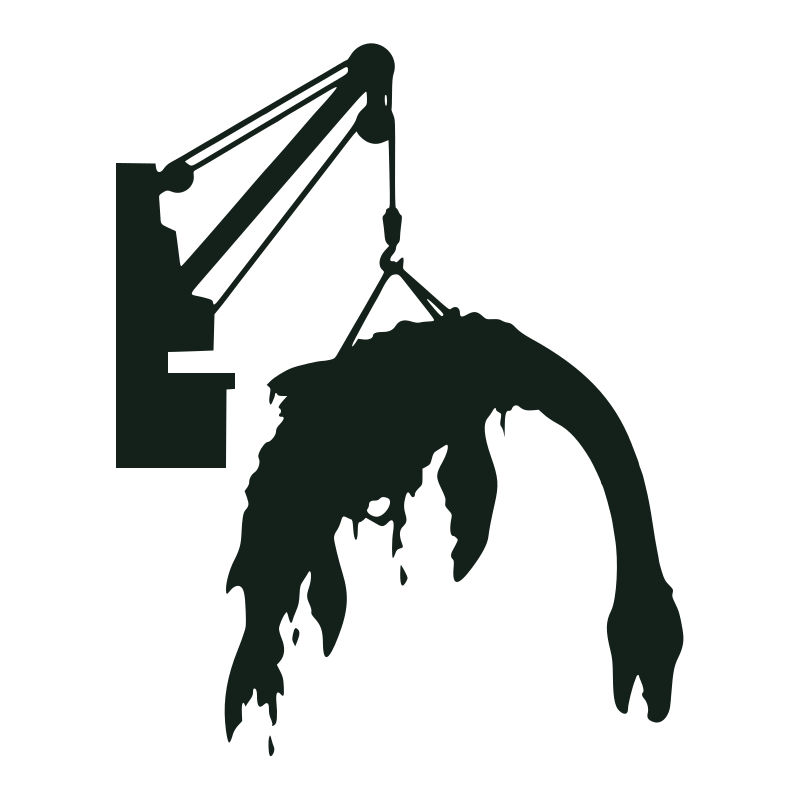
After a storm on 25 September 1808, a huge carcass washed up on the island of Stronsay in Orkney. A carpenter and two farmers measured it at 55 ft long without part of its tail, and 4 ft wide. It had a long neck, three pairs of 'paws' or 'wings', and a row of bristles down its back that glowed in the dark when wet.
Edinburgh's Wernerian Natural History Society decided it was a new kind of sea serpent, and the naturalist Patrick Neill named it Halsydrus pontoppidani after Erik Pontoppidan, the bishop who wrote about sea serpents and the kraken.
In London the anatomist Sir Everard Home argued the length must be wrong, about 30 ft, and that the animal was a rotting basking shark, which John Goodsir agreed with in 1849. A decaying basking shark loses its jaw, gills and fins, leaving a long-necked shape; the same mistake was made with the Zuiyō Maru carcass in 1977. Karl Shuker has argued that the 55 ft length was reliable and the animal may have been a larger, unknown relative of the basking shark.
What was shown or claimed
- A long neck and small head
- Three pairs of limbs
- Bristles that glow in the dark when wet
Timeline
- 1808Stronsay Beast washes ashore after a storm
Stronsay, OrkneyAfter a storm on September 25, 1808, a carcass measured at about 55 ft washed ashore on Stronsay in Orkney. Edinburgh's Wernerian Society named it a new sea serpent, Halsydrus pontoppidani. Anatomist Everard Home, and later John Goodsir, concluded it was a decomposed basking shark, which can look serpent-like when it rots.
Know more about the Stronsay Beast?
Found an old article, a photo or a mistake on this page? Send it in. Every note is read by a person, and we credit sources.