The story
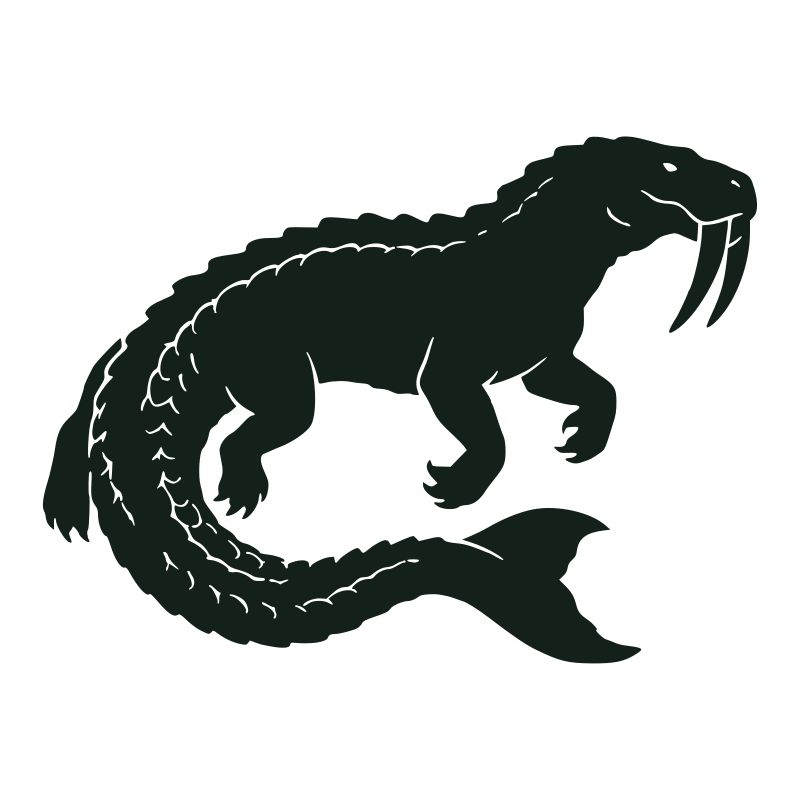
On 12 June 1983, 15-year-old Owen Burnham, on holiday from Senegal, found a carcass on Bungalow Beach at Kotu in The Gambia. He described it as about 15 ft long, dark above and white below, with a long beak holding about 80 teeth, four paddle-like flippers and a long tail with no flukes. Two fishermen were cutting off its head to sell to a tourist, and they called it a dolphin.
Burnham's account appeared in BBC Wildlife in 1986, and Karl Shuker wrote about it the same year, suggesting it might be a surviving marine reptile. The name 'Gambo' came from a 1993 Fortean Times article.
Palaeontologist Darren Naish and others think a mangled dolphin or beaked whale is far more likely. Dorsal fins and tail flukes are among the first parts lost as a whale or dolphin rots, and in 2006 a bottlenose dolphin with a pair of extra hind flippers was caught off Taiji, Japan.
What was shown or claimed
- A long, toothed beak
- Four flippers
- A tail with no flukes
Timeline
- 1983Owen Burnham finds the carcass
Kotu, GambiaOn 12 June 1983 a young British wildlife enthusiast, Owen Burnham, found a 15-foot carcass with a long toothed beak and four flippers on Bungalow Beach in Kotu, The Gambia. Two fishermen were cutting off its head to sell to a tourist. Its identity is still debated, with beaked whales among the suggestions.
Know more about the Gambo?
Found an old article, a photo or a mistake on this page? Send it in. Every note is read by a person, and we credit sources.