
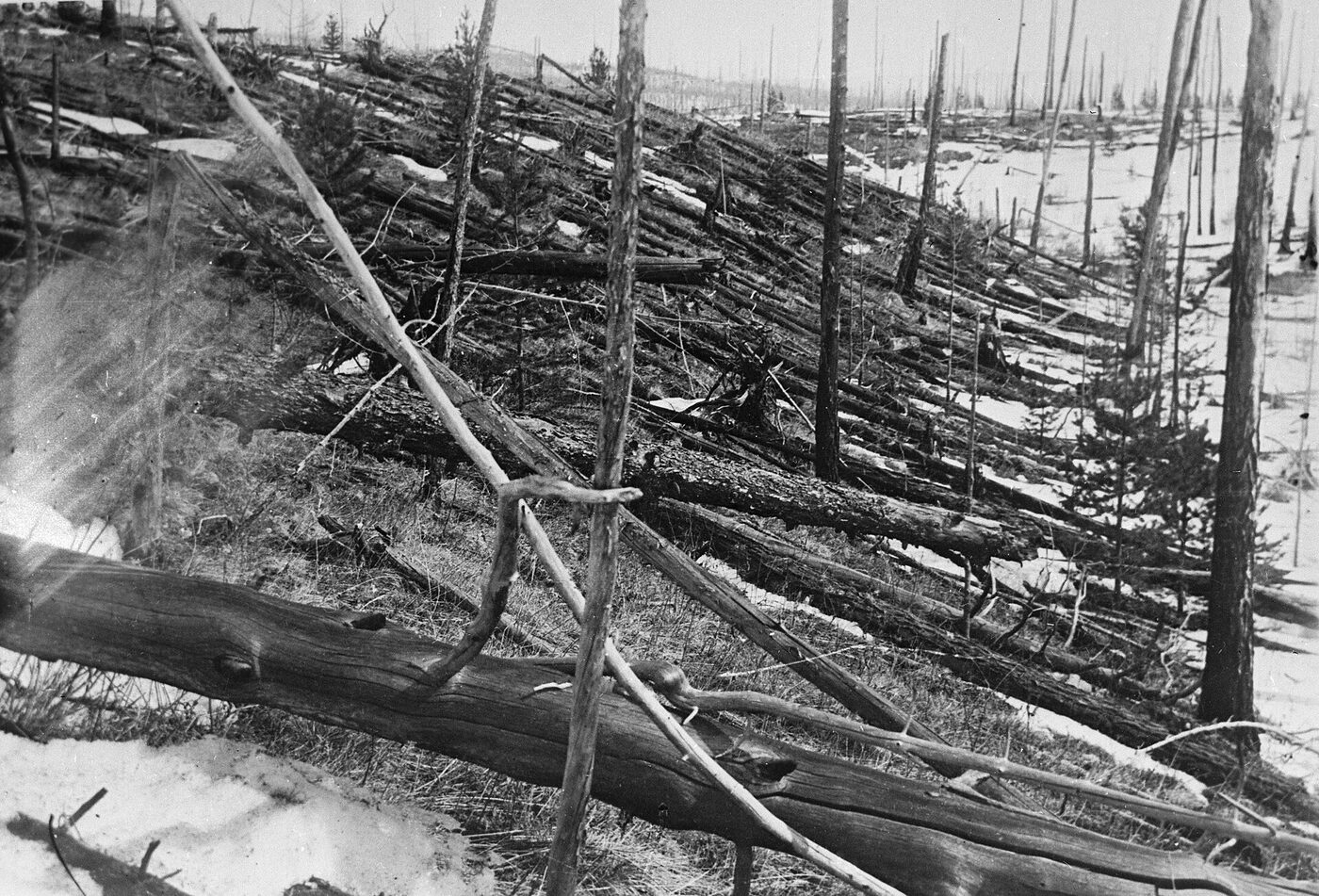
At about 7:14 a.m. local time on June 30, 1908, a huge explosion went off over the taiga near the Podkamennaya Tunguska River in central Siberia. The shock wave knocked people to the ground, shattered windows up to 200 km away and was picked up by seismographs in Russia and Germany. For several nights afterwards, the night sky glowed unusually bright across western Eurasia.
The area was home to Evenk reindeer herders. At least three Evenks died, and herds of reindeer were killed. More than 700 eyewitness accounts were collected over the following decades, including a farmer at the trading post of Vanavara who described the sky splitting in two and a wave of heat.
Political upheaval and the remoteness of the site meant no scientist reached it until Leonid Kulik's expeditions in the 1920s. In 1927 his Evenk guides led him to the centre, where he expected a crater. Instead he found trees still standing but stripped of branches, surrounded by a butterfly-shaped zone, about 70 km across, where trees had been knocked flat pointing away from the centre.
Most scientists now think a stony object roughly 50 to 60 m across exploded 5 to 10 km above the ground, with an energy of a few to about 15 megatons of TNT. The 2013 Chelyabinsk meteor gave researchers a smaller modern example to compare it with. Because no meteorite has been confirmed, other ideas have been put forward, from a comet to a burst of natural gas, and more fanciful claims about a crashed spacecraft.