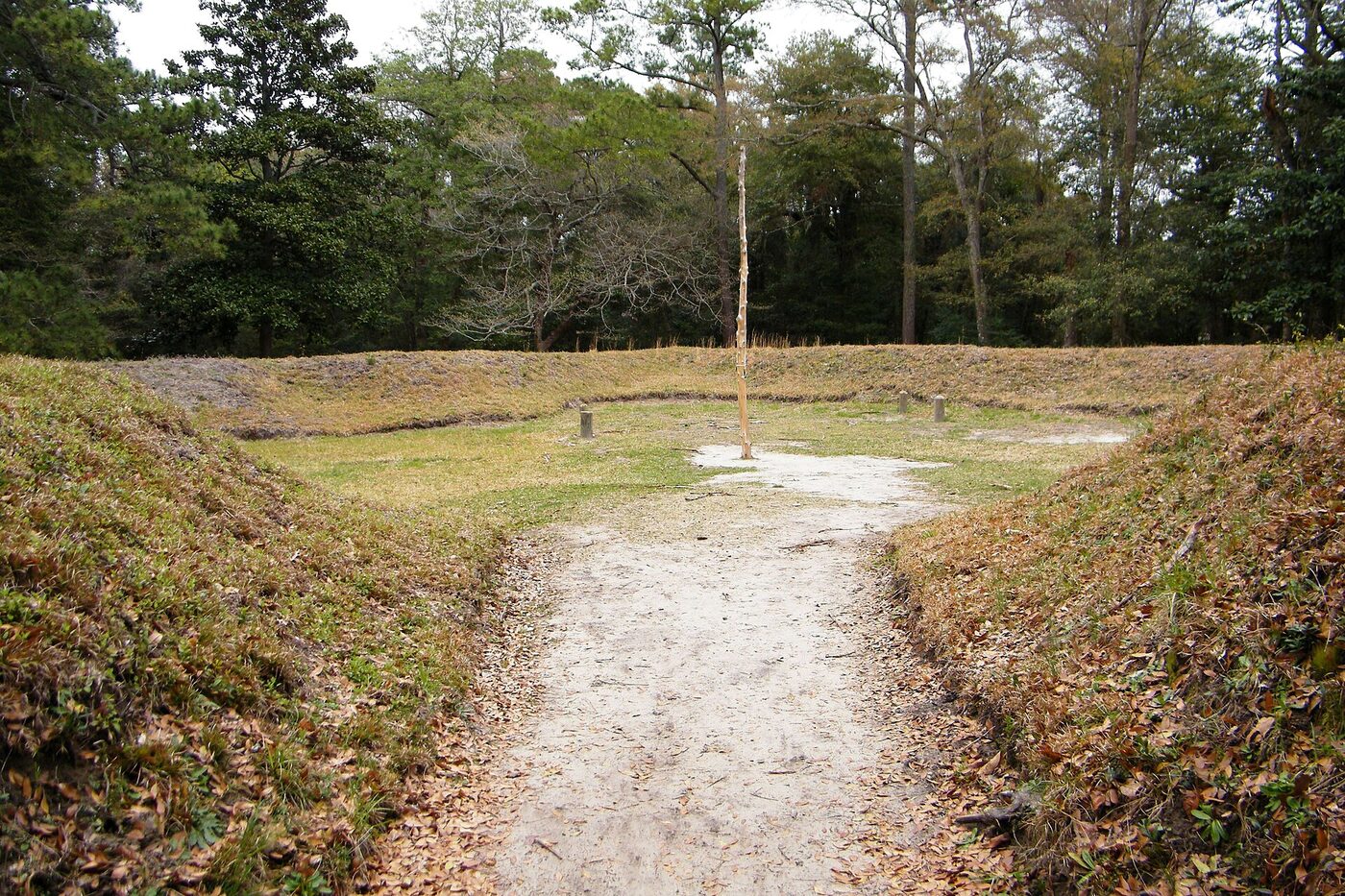
In 1587, a group of English settlers led by John White landed on Roanoke Island, in what is now North Carolina. White's granddaughter, Virginia Dare, was born there that August, recorded as "the first Christian born in Virginia". Soon afterwards White sailed home for supplies, but war with Spain kept him in England until 1590.
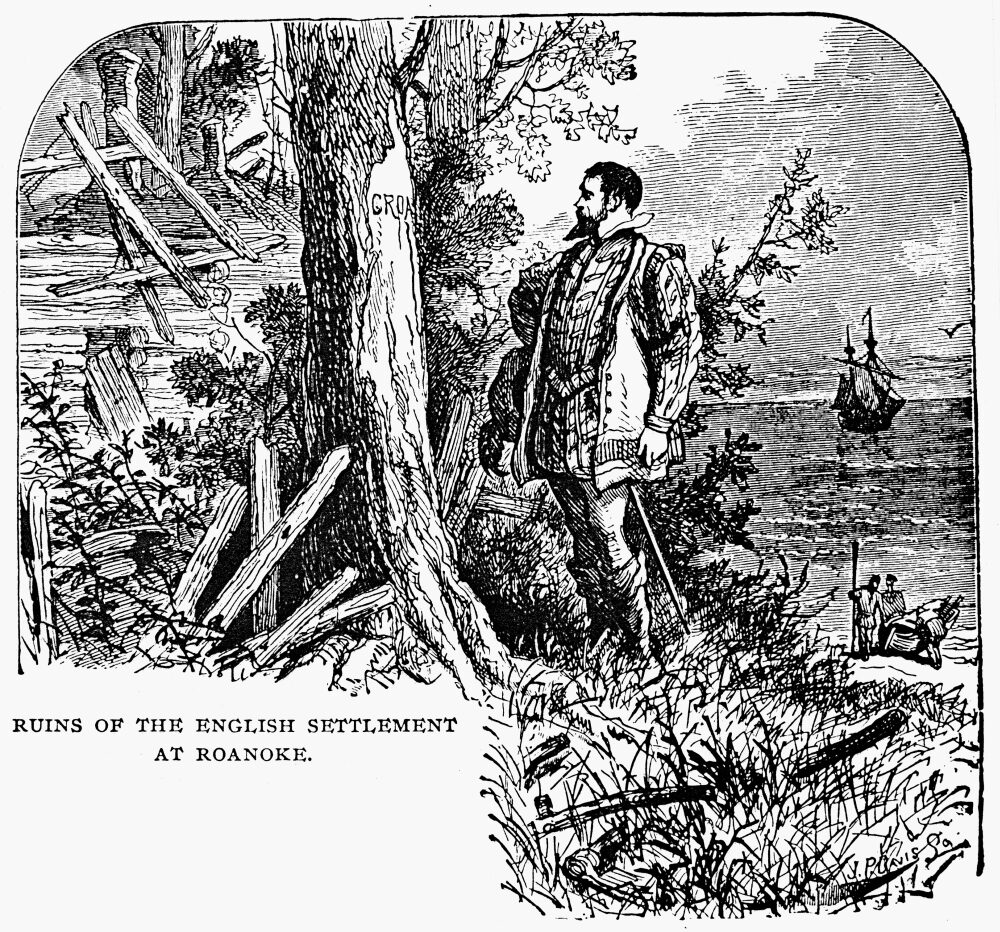
When White returned on August 18, 1590, his granddaughter's third birthday, the settlement was empty. The houses had been taken down and the site fortified. 'CRO' was carved on a tree and 'CROATOAN' on a post, the name of a nearby island and its people. White took this as the agreed sign that the colonists had moved there, since there was no cross to signal distress. Storms stopped him from searching Croatoan, and he never saw the colonists again.
Tree-ring studies show a severe drought in 1587 to 1589. Digs at 'Site X' inland and on Hatteras Island, the old Croatoan, have found 16th-century European objects, and in 2025 researchers reported iron-working waste on Hatteras that they say points to the settlers. The Lumbee tribe identifies as descended in part from the colonists.