Encounter Atlas
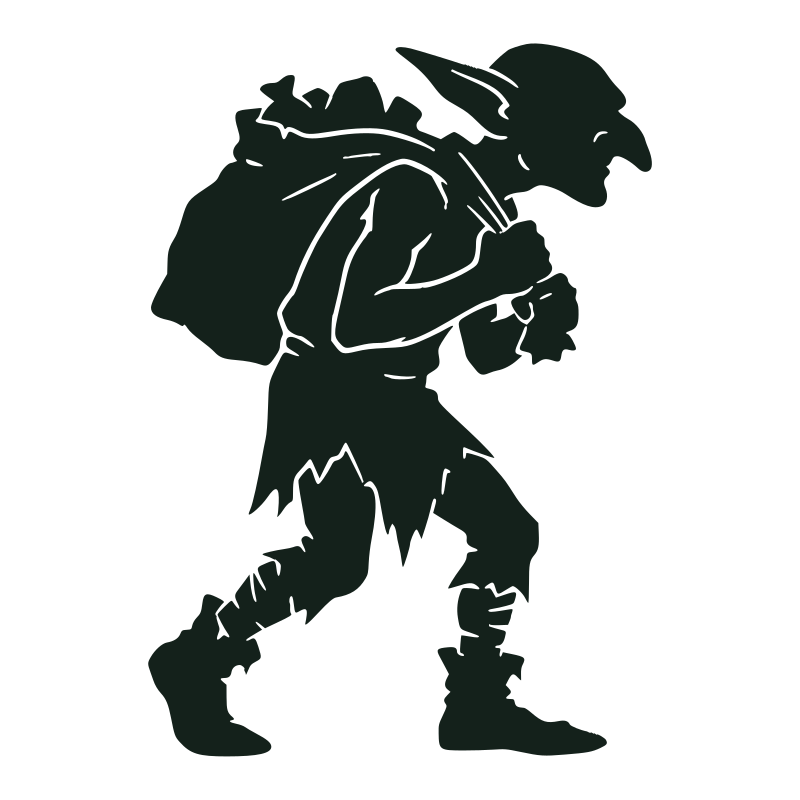
Spriggans are among the least friendly of Cornwall's little people. The name comes from the Cornish word for 'spirits'. They are described as ugly, wizened old men with large heads, found at ruins, cairns, barrows and hillforts, where they guard buried treasure. Though small, they were said to be the ghosts of giants and kept a giant's strength; in one story they swell to enormous size.
Spriggans were blamed for sudden whirlwinds, storms that ruined crops, stolen cattle and robbed houses, and for taking human children and leaving changelings. In one tale an old woman beat a band of them by turning her clothes inside out. The folklorist Katharine Briggs called them the fairies' bodyguards.
Robert Hunt tied them to Trencrom Hill, a hillfort near St Ives. They are distinct from the friendlier pixies and from the knockers of the tin mines. A spriggan sculpture by Marilyn Collins has peered out of an arch on the Parkland Walk in north London since 1993.
What witnesses report
- Sudden whirlwinds on a still day
- Small grotesque figures near cairns or barrows
- A figure that seems to grow larger
- Bad luck after digging for treasure
Famous cases
- 1865Robert Hunt links spriggans to Trencrom Hill in Popular Romances of the West of England
Trencrom Hill, Cornwall - 1993Spriggan sculpture installed on the Parkland Walk
Parkland Walk, London
Seen the Spriggans?
Tell us what happened. Every report is read by a person before it goes on the map, and you can stay anonymous.